Solitaire Truck
- 4.6
- Rating
- 1.00M
- Installs
- Free
- Price

 Analysis by App-foxy
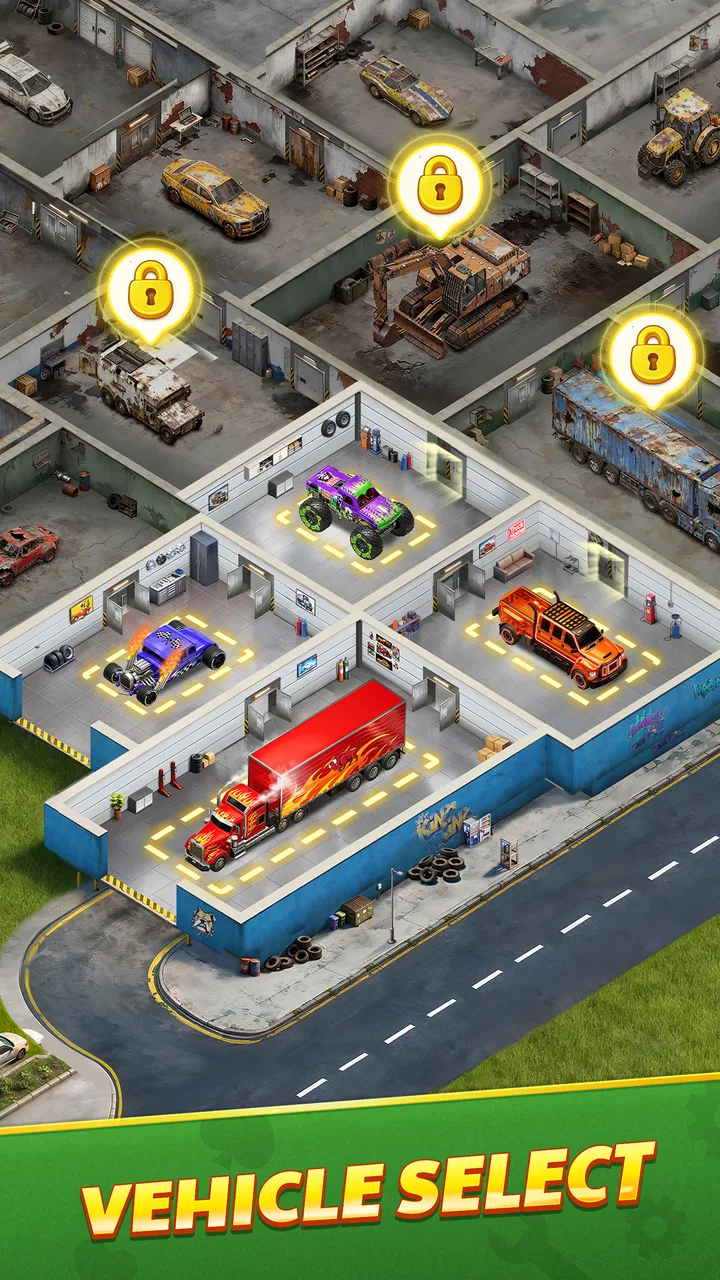
I went into Solitaire Truck expecting a familiar card game with a decorative theme, but its appeal is really tied to the small sense of ownership created around the truck. The basic activity remains recognizable solitaire, while each completed session contributes to the feeling that the vehicle is becoming more personal. That combination makes it easy to understand within a few minutes and gives ordinary card rounds a clearer purpose than simply chasing another win.
It is a free card game from SolitaireBit Studio, rated for Everyone, and it has already attracted over a million installs. The audience response is also strong, with a 4.7 average from around thirty thousand ratings. Those numbers do not guarantee that every player will enjoy the pacing, but they do fit my impression of a game that is approachable, lightweight, and built for people who want short, repeatable sessions rather than a complicated strategy experience.
How the truck gives solitaire a clearer sense of purpose
The early goals are deliberately easy to grasp. I am not asked to learn a large collection of modes, manage a complicated deck of resources, or understand a long tutorial before playing. The central loop is card play, followed by the satisfaction of restoring and customizing the truck. That framing matters because a standard solitaire app can sometimes feel like an endless sequence of disconnected hands. Here, the vehicle gives those hands a visible reason to continue.
You May Also Like

 Blood Strike: 2.5 Anniversary
Blood Strike’s Loadouts Turn Every Drop Into a Tactical Gamble
A close look at Blood Strike’s custom loadouts: how fast access to signature weapons reshapes its battle royale rhythm, rewards preparation, and narrows the gap between fights.

 Pandora - Music & Podcasts
Pandora’s Music Is Easy to Start, but Harder to Recover
Pandora’s strength is its low-effort path from a seed to a station. Its weak spot is how much confidence it asks you to place in connection, setup, and quiet recovery.

 8 Ball Pool
 Is Built on Rivalries, Rematches, and Routine
A close look at the rivalries, rematches, shared routines, and unanswered safety questions that turn a quick pool match into a persistent mobile community.

 Samsung Music
’s Quiet Strength Is Playing What You Already Own
Its reach comes less from spectacle than from dependable access to a personal library. That simplicity is both the app’s strongest retention engine and its ceiling.

 AccuWeather: Weather Radar
AccuWeather Review: A Quick, Clear Forecast for Everyday Decisions
For everyday plans, the best forecast is the one you can understand quickly. AccuWeather makes rain timing, radar, and local conditions easy to act on, with a few trade-offs.

 Hill Climb Racing
Why Hill Climb Racing Still Turns Crashes Into One More Run
A tiny car, a bumpy hill and one more upgrade: Hill Climb Racing keeps resurfacing because its simple chaos makes every near-miss feel personal.
More From Our News Desk



I found this especially useful during short breaks. If I have only a few minutes, I can start a round without committing to a long story or a demanding challenge. The truck theme also makes the game feel more personal than a plain green-table solitaire presentation. It is not a replacement for deep simulation or a full vehicle-building game; the truck is the motivation wrapped around the card activity. Players who understand that relationship will probably enjoy it more than people expecting detailed mechanical customization.
The first useful habit is to treat each hand as a small task rather than measuring the game only by a perfect win streak. A player who focuses exclusively on flawless results may find the experience more frustrating than necessary. The stronger approach is to use the card rounds as the steady activity and view restoration as the longer-term reward. That keeps a difficult hand from making the entire session feel wasted.
Another practical tip is to play when you actually want a calm puzzle, not when you are looking for constant novelty. The appeal comes from repetition with a visual goal attached. I would recommend it to someone who enjoys sorting cards, making careful choices, and gradually improving a themed space. I would be less likely to recommend it to a player who needs rapid action, competitive multiplayer, or a large variety of unrelated challenges.
What progress feels like from one session to the next
The progress signals are mainly connected to the truck and the sense of moving from a neglected vehicle toward something that reflects your choices. That is a smart match for solitaire because the card game naturally produces many small moments of completion. Even when a round is not especially memorable, the broader restoration objective can make the session feel connected to the next one.
In my experience, this works best when I set a modest target before starting. I might play until I have made a little progress, then stop instead of forcing myself through a long stretch of similar hands. This prevents the customization layer from turning into pressure. The game is more enjoyable when the truck is a reason to return, not an obligation hanging over every round.
The customization angle also gives the game a different emotional rhythm from classic solitaire apps that focus purely on score, time, or win percentage. A score is useful for comparison, but it can become abstract. A visible change to the truck is easier to understand at a glance. That makes the game suitable for players who like collection and restoration themes but do not want to learn a complex management system.
There is a trade-off here. If you want every decision to have a meaningful strategic consequence, the truck layer may feel more like an incentive than a deep progression system. Its strength is clarity, not complexity. I appreciate that because it keeps the game accessible, but experienced card players may eventually want more variation than the restoration structure alone can provide.
A good everyday use case is a quiet commute or a waiting-room visit, provided you are comfortable playing in short bursts. I would begin with one or two hands, notice whether the restoration goal is motivating me, and avoid spending simply to speed up the feeling of progress. The free entry point makes that trial easy, while the optional purchases, ranging from $0.99 to $39.99 per item, mean that players should decide in advance how much the customization is worth to them.
Where the difficulty curve helps and where it may slow the mood
Solitaire is naturally built around a balance between familiar rules and uncertain outcomes. The challenge comes from choosing which cards to expose, which moves to delay, and when to commit to a sequence. That makes the difficulty feel different from an action game: the tension is quiet, and a mistake can become apparent only after several moves.
For a new player, the game’s accessibility is a major advantage. The card format is recognizable, and the truck gives the activity a friendly identity instead of presenting it as a purely abstract puzzle. I could imagine recommending it to someone who has not played many mobile games, especially if they prefer games that can be paused naturally between hands.
More experienced solitaire players may judge the difficulty differently. They are likely to notice the structure of the card decisions quickly and may want a sharper challenge, more control, or a stronger reason to replay a familiar setup. The truck theme can soften that concern for a while, but it cannot completely replace mechanical variety. If your main goal is to test advanced solitaire technique, a specialized solitaire title may be the better choice.
My advice is to avoid rushing simply because a restoration objective is visible. Fast moves are not always good moves in a card game. I found that taking a moment to check possible reveals before committing to a sequence helped preserve options. This is a small but important distinction: the game rewards attention more than frantic tapping, and the customization goal should not push you into careless play.
The pacing is strongest when the card round and the truck objective support each other. A hand provides the immediate activity; restoration provides the longer horizon. If either part becomes too repetitive for you, the other may not be enough to compensate. That is the main limitation I would keep in mind before installing it: the game’s appeal depends on enjoying the core solitaire loop, not merely liking the idea of a truck.
How the reward cycle can encourage longer play
The retention pressure is fairly easy to understand. A player completes card rounds, sees progress toward restoring or customizing the truck, and has a reason to return for another session. This is a familiar mobile structure, but it is not automatically a negative one. In this case, the loop feels most comfortable when I decide my own stopping point and treat the truck as a bonus layer rather than a demand.
The risk is that customization can make ordinary card play feel like a means to an end. Once the novelty of the truck has settled, players who are not already fond of solitaire may notice the repetition more clearly. That is why I would not describe this as a game for someone who needs a constantly changing stream of content. It is better suited to people who enjoy a dependable routine with a gradual visual payoff.
The purchase range deserves a thoughtful approach. Since the game is free to start but offers in-app items, I would play long enough to decide whether the basic loop is satisfying before buying anything. Spending may make sense for a player who particularly enjoys the restoration theme, but it is not a substitute for liking the card play. If the hands themselves feel dull, accelerating progress will probably not solve the underlying problem.
I also think the Everyone rating makes the presentation easy to recommend in a broad household setting, but that does not mean every family member will have the same patience for it. Younger players may like the truck goal, while adults who prefer traditional solitaire may care more about the quality and fairness of the card decisions. The right fit depends less on age than on whether the player enjoys calm repetition and incremental rewards.
One of the more useful ways to manage the retention loop is to separate “I want to play” from “I feel I must finish.” If I open the game because I have a few relaxed minutes, it works well. If I keep playing only because the next customization step is close, the experience becomes less pleasant. That distinction is important for any progression-based card game, and it is particularly noticeable here because the truck provides such a clear visual target.
Who should choose it over a traditional solitaire app
I would choose this game over a plain solitaire app when I want a little more personality and a reason to connect separate rounds. The truck theme gives the familiar format a warmer identity, and the restoration concept is more inviting than a bare score screen. It is also a sensible option for players who want a free starting point and do not want to learn a large ruleset.
Compared with a traditional solitaire app, the trade-off is focus. A conventional title may be better if you care about pure card efficiency, statistics, or a minimal interface. Compared with a broader casual game, this one offers less variety but usually demands less attention. Compared with a restoration or building game, it offers a simpler interactive foundation and should not be approached as a detailed workshop simulator.
I would skip it if I need competitive pressure, elaborate narrative, fast reflexes, or a wide selection of puzzle types. I would also skip it if I dislike repeated card hands, because the truck cannot remove that central fact. On the other hand, it is a strong candidate for someone who wants a relaxing game to revisit, likes visible progress, and enjoys the idea of making a virtual truck feel like their own.
The current release is version 2.0.0 and supports devices running Android 6.0 or later. That makes it practical for people using older compatible Android hardware, although the overall experience will still depend on how comfortable the device is with the game. The important point for a prospective player is that this is not presented as a demanding, high-speed title; its design is centered on accessible card sessions and gradual restoration.
My verdict on goals, pacing, and long-term appeal
After spending time with it, I think the progression succeeds because it gives solitaire a simple emotional direction. The early goal is clear, the truck provides a visible progress signal, and the card rounds supply the repeatable activity needed to move forward. The difficulty is quiet rather than dramatic, so the game works best when I am in the mood for concentration without pressure.
Its biggest strength is the relationship between a familiar card format and a more personal restoration theme. Its biggest weakness is the same relationship: if the underlying solitaire does not hold your attention, the truck will eventually feel like decoration around repetition. The optional purchases also make restraint important. I would enjoy the free experience first and only consider spending after deciding that the complete loop genuinely fits my habits.
My recommendation is to try it as a relaxed, goal-driven solitaire game rather than as a full truck customization adventure. SolitaireBit Studio has chosen a clear direction, and the result is easy to pick up, pleasant for short sessions, and more motivating than a completely bare card table. It is not the right choice for every card-game fan, but for players who like gradual restoration, modest challenge, and a game that can fit into everyday pauses, it is a convincing option.
FAQs for Solitaire Truck
01What is Solitaire Truck and what makes it unique?
Solitaire Truck is a mobile game that combines the classic solitaire card game with a truck-driving adventure theme. The unique blend allows players to enjoy strategic card gameplay while navigating through various truck-themed levels. Its innovative design and fun graphics make it stand out from traditional solitaire apps.
02Is Solitaire Truck available for both Android and iOS devices?
Yes, Solitaire Truck is available for download on both Android and iOS platforms. You can find it on the Google Play Store for Android devices and the Apple App Store for iOS devices. Ensure that your device meets the app’s system requirements for optimal performance.
03Does Solitaire Truck require an internet connection to play?
Solitaire Truck can be played offline, allowing you to enjoy the game without an internet connection. This feature is particularly useful for players who want to play on the go, without relying on Wi-Fi or mobile data. However, some features, such as leaderboard access, may require connectivity.
04Are there in-app purchases in Solitaire Truck?
Solitaire Truck offers in-app purchases that enhance the gaming experience. Players can purchase items like special card decks, power-ups, or additional levels. While the game is free to play, these optional purchases can provide more customization and convenience for those who want to progress faster.
05How does Solitaire Truck handle user privacy and data security?
Solitaire Truck prioritizes user privacy and data security. The app adheres to standard data protection practices, ensuring that personal information is kept confidential. Users are encouraged to review the app’s privacy policy for detailed information on data collection, usage, and storage practices.
Pros
- Engaging gameplay with truck-themed cards.
- Simple interface suitable for all ages.
- Offline mode available for on-the-go play.
- Variety of difficulty levels to challenge.
- Low battery consumption for extended play.
Cons
- Limited customization options for cards.
- Ads can be intrusive during gameplay.
- No multiplayer or online leaderboard.
- Occasional lag on older devices.
- Lacks a tutorial for beginners.

Solitaire Truck
Gallery